Combination, system and regular boilers
A combination boiler heats water on demand with no cylinder, which saves space and suits a one-bathroom home with good mains flow. Its weakness is simultaneous demand: two showers at once, or a shower and a running tap, will disappoint.
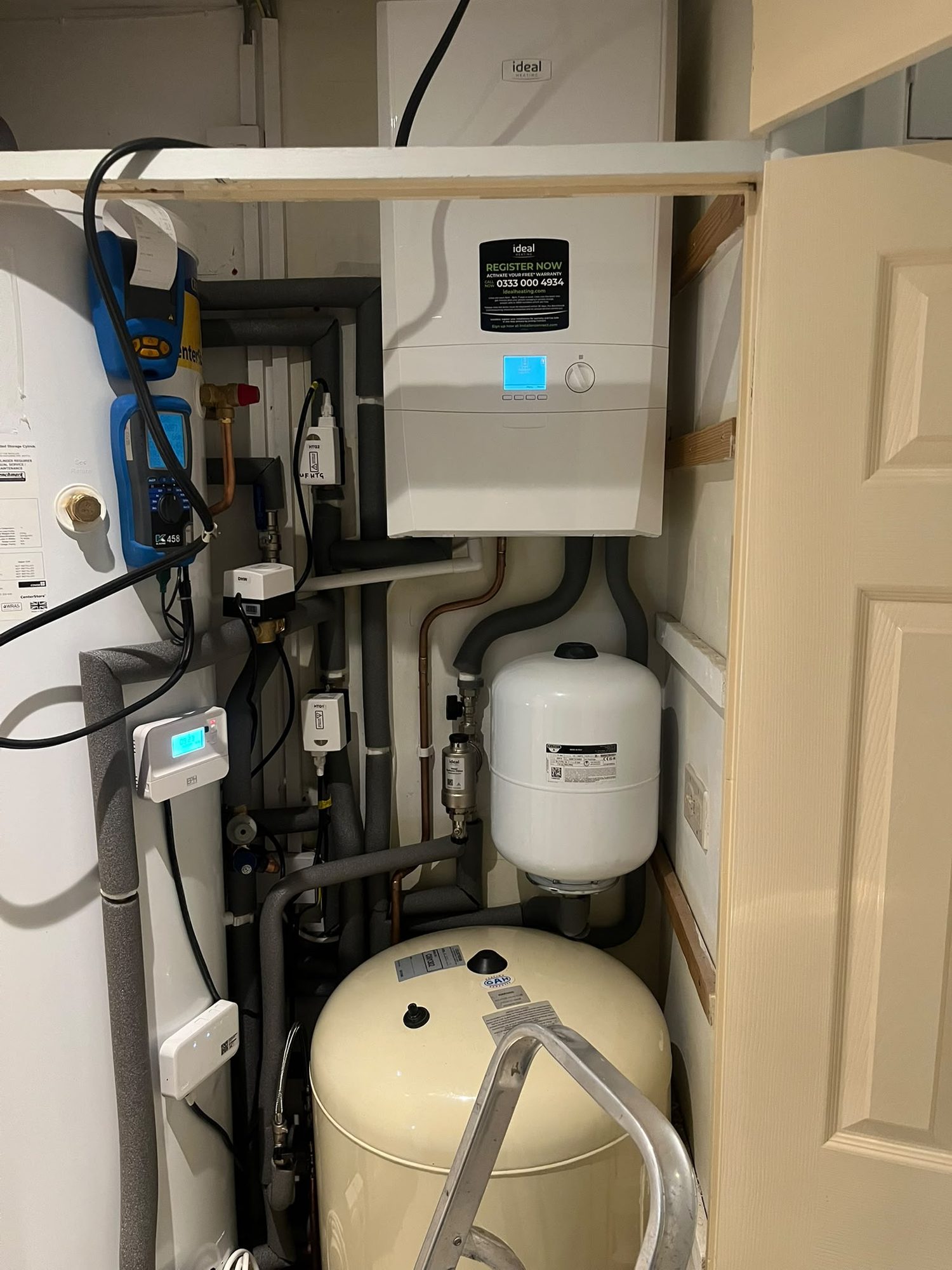
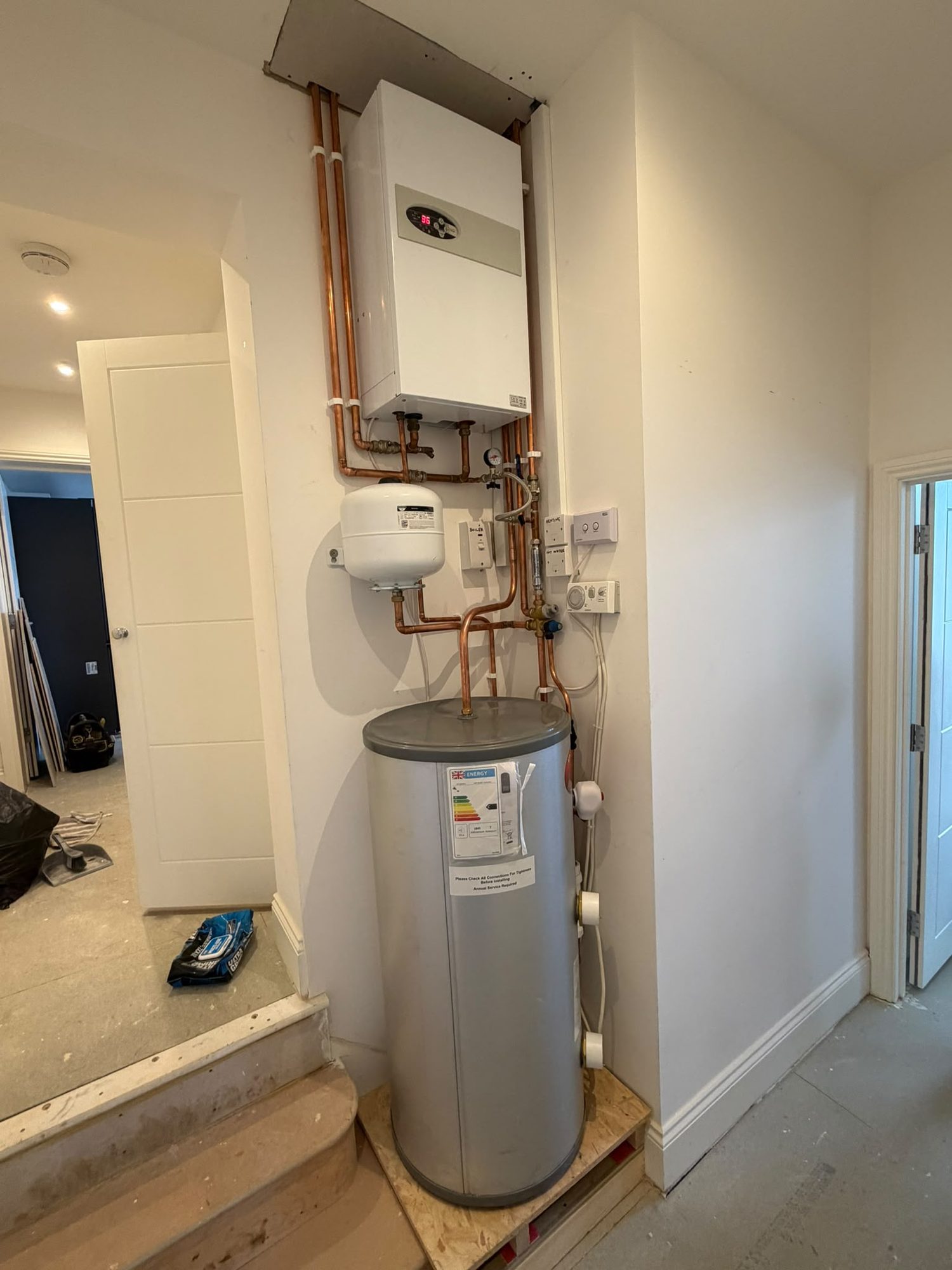
A system boiler works with a stored hot water cylinder, usually unvented, and is the usual answer for two or more bathrooms. Stored hot water gives high simultaneous flow and is far less sensitive to incoming mains. We are G3 qualified, so we can install the cylinder as part of the same project.
A regular (heat-only) boiler works with a vented cylinder and a tank in the loft. It still suits some older properties, particularly where the existing pipework and gravity arrangement are sound and a full conversion is not justified.
Sizing, flow rate and controls
Boiler output should be matched to the heat loss of the property plus the hot water requirement, not chosen by rule of thumb. An oversized boiler cycles on and off repeatedly, which wastes gas and wears components. We look at the house and the radiators, not just the number of bedrooms.
For any combination boiler, incoming mains flow rate is the deciding number. We measure it rather than assume it, because a combination boiler cannot deliver more hot water than the mains can supply it with.
Controls matter as much as the appliance: programmers, room and cylinder thermostats and zone valves determine how much gas is spent on comfort. We set the system up and explain it before we leave, because a good system set up wrongly still produces high bills.
Flues, condensate and gas supply
Flue routing and termination have to comply with the manufacturer's instructions and gas regulations: correct clearances from windows, doors, boundaries and openings. Where a boiler is being relocated, flue route and gas supply capacity are often the practical constraints, not the boiler itself.
Condensate discharge is a common failure point, particularly where an external run has been installed in undersized pipe. It freezes and locks out the boiler on the coldest morning of the year. Internal routing to a suitable drain is preferred, with correct pipe sizing and insulation where an external section is unavoidable.
Gas supply pipework must be capable of delivering the required volume with acceptable pressure drop at full rate. Undersized supply is a frequent cause of poor performance on an otherwise good installation.
System cleaning, treatment and protection
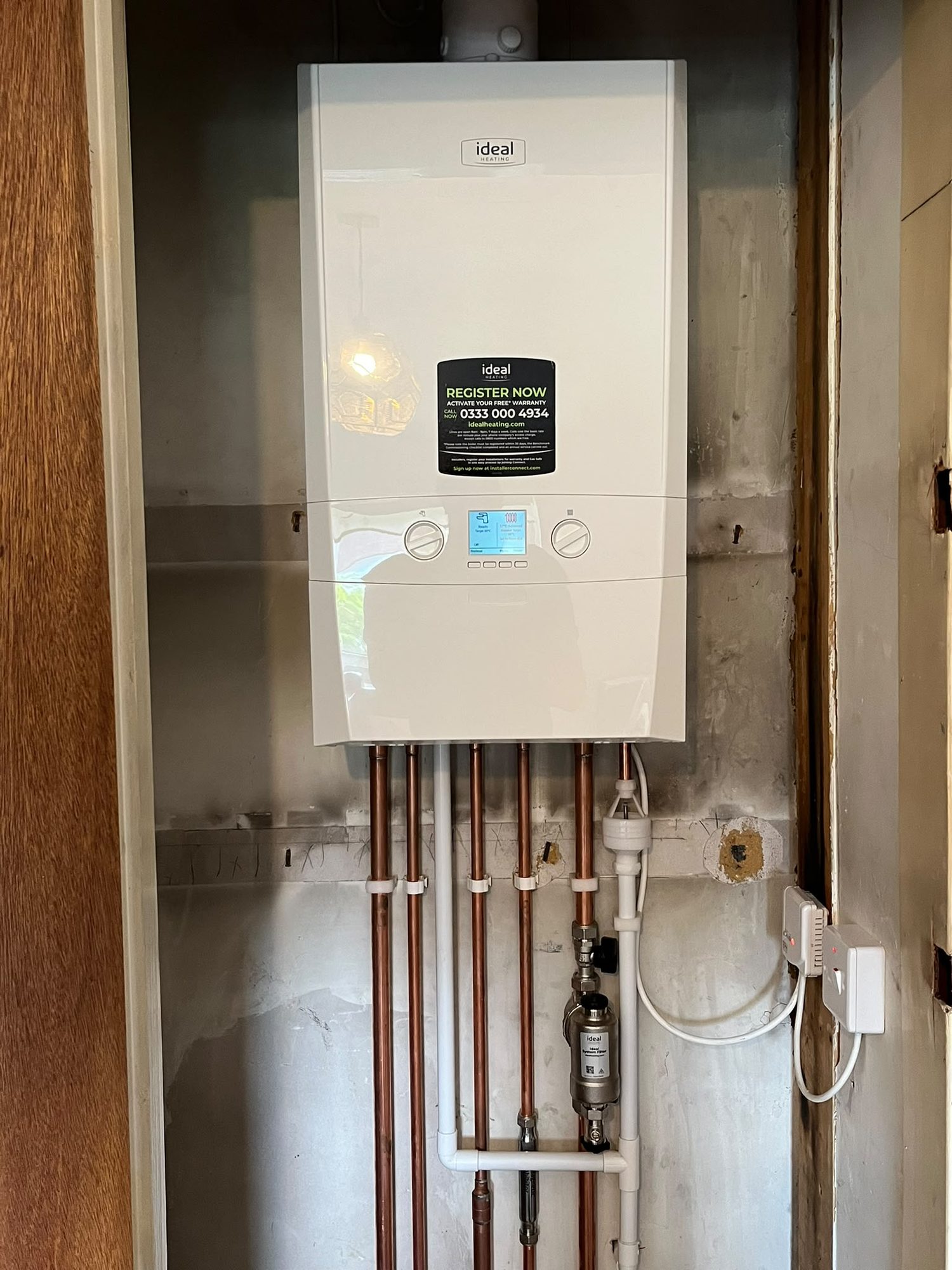
Before a new boiler goes on, existing system water is cleaned or flushed as the condition requires, then dosed with inhibitor. This is not an upsell: manufacturers' warranty conditions generally require it, and the heat exchanger is the most expensive part of the appliance.
A magnetic filter is a sensible addition on any system with corrosion history, capturing debris before it reaches the boiler and making future servicing more informative. Water in this region is hard, and scale management should be part of the conversation on both heating and hot water.
Repairs, servicing and what we do not do
Common faults are pressure loss, ignition failure, diverter valve problems, pump faults, blocked condensate and failed sensors. We diagnose the cause rather than replacing parts in sequence, and we will tell you honestly when a repair is not economic on an old appliance.
Annual servicing starts from £90 + VAT, with parts on top if anything is needed. Servicing keeps the appliance safe, keeps most manufacturers' warranty conditions intact and catches wear before it becomes a breakdown.
We work on natural gas only, we do not work on LPG. Our work is domestic.