Substrates: what goes behind the tile
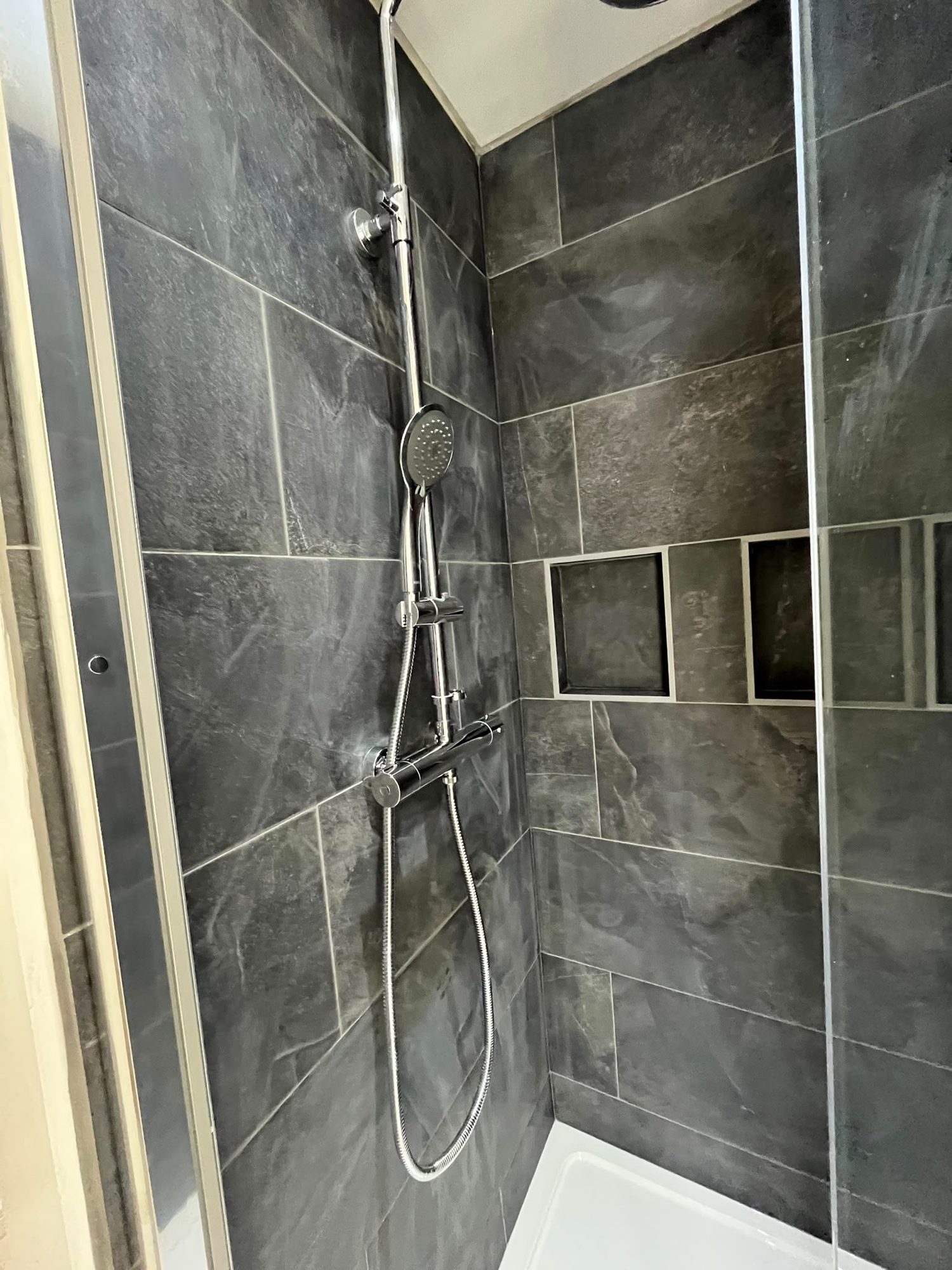
Standard plasterboard is acceptable for a lightly used splashback but not for a shower enclosure. Wet areas need a suitable tile backer board or a properly applied tanking system, with joints, internal corners and pipe penetrations sealed with tape and compound.
Existing plaster can be tiled if it is sound, dry and flat, but plaster has a weight limit and large-format porcelain often exceeds it. Where weight is a factor we say so before the tiles are ordered, because that decision cannot be reversed later.
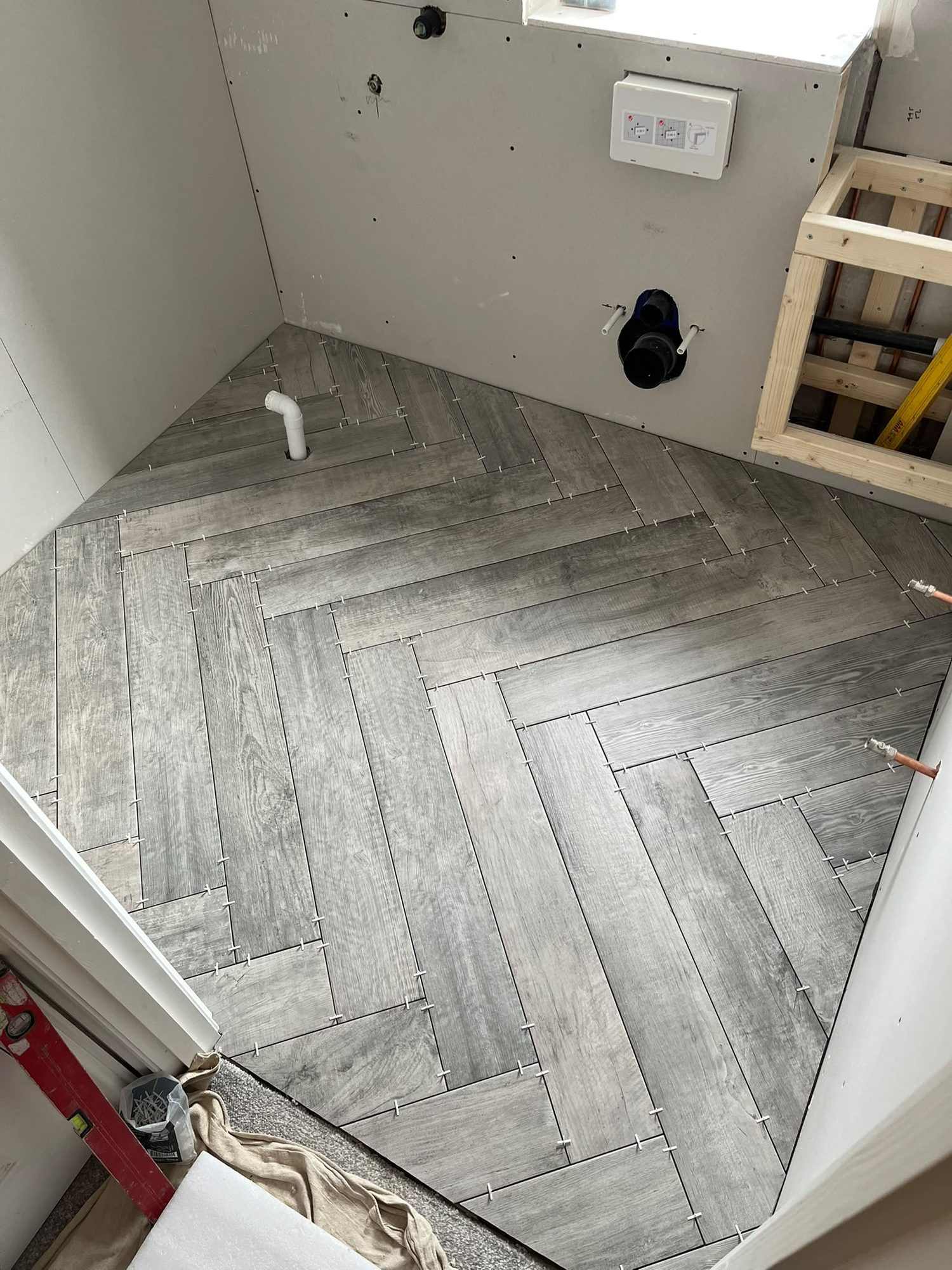
Floors are assessed for deflection. Timber floors generally need overboarding or an uncoupling membrane, particularly for porcelain and stone. Concrete floors need to be dry, level and primed appropriately.
Tile types and how they behave
Ceramic is lighter and easier to cut, which suits walls and smaller formats. Porcelain is denser, harder-wearing and the usual choice for floors and large formats, but it needs the right adhesive and better substrate flatness because it will not follow an uneven wall.
Natural stone brings its own requirements: sealing before and after grouting, care with adhesive colour showing through lighter stone, and awareness that some stones are damaged by acidic cleaners. Mosaic and small-format tiles need particular attention to flatness because every deviation shows across the sheet.
Large-format tiles need solid bed coverage and a levelling system to control lippage. Cutting them accurately, especially around waste outlets and brassware, is where experience shows.
Adhesives, grouts and joints
Adhesive is chosen for the tile, the substrate and the environment: flexible adhesives on timber floors and underfloor heating, rapid-set where a room has to come back into use, and the correct bed thickness for the format. The wrong adhesive with the right tile still fails.
Grout choice follows the joint width and the exposure. Shower floors and heavily used areas benefit from grout designed to resist staining and water ingress. Junctions where two planes meet, wall to floor, wall to tray, around a bath, always move, so they are sealed with silicone rather than grouted.
Movement joints are provided where a floor area is large, where the substrate changes, and at perimeters, so seasonal and thermal movement has somewhere to go instead of cracking the field of tiles.
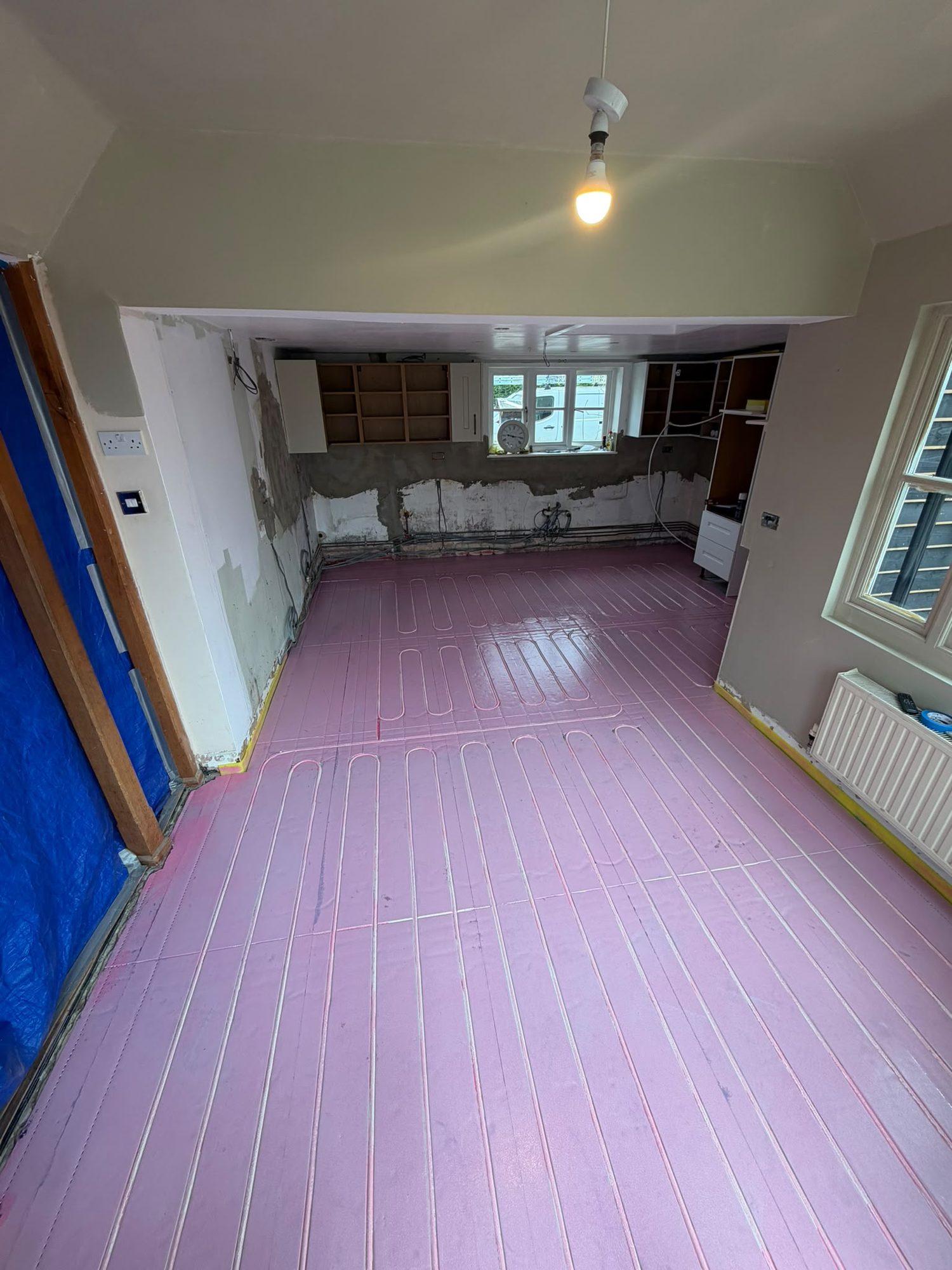
Tiling over underfloor heating
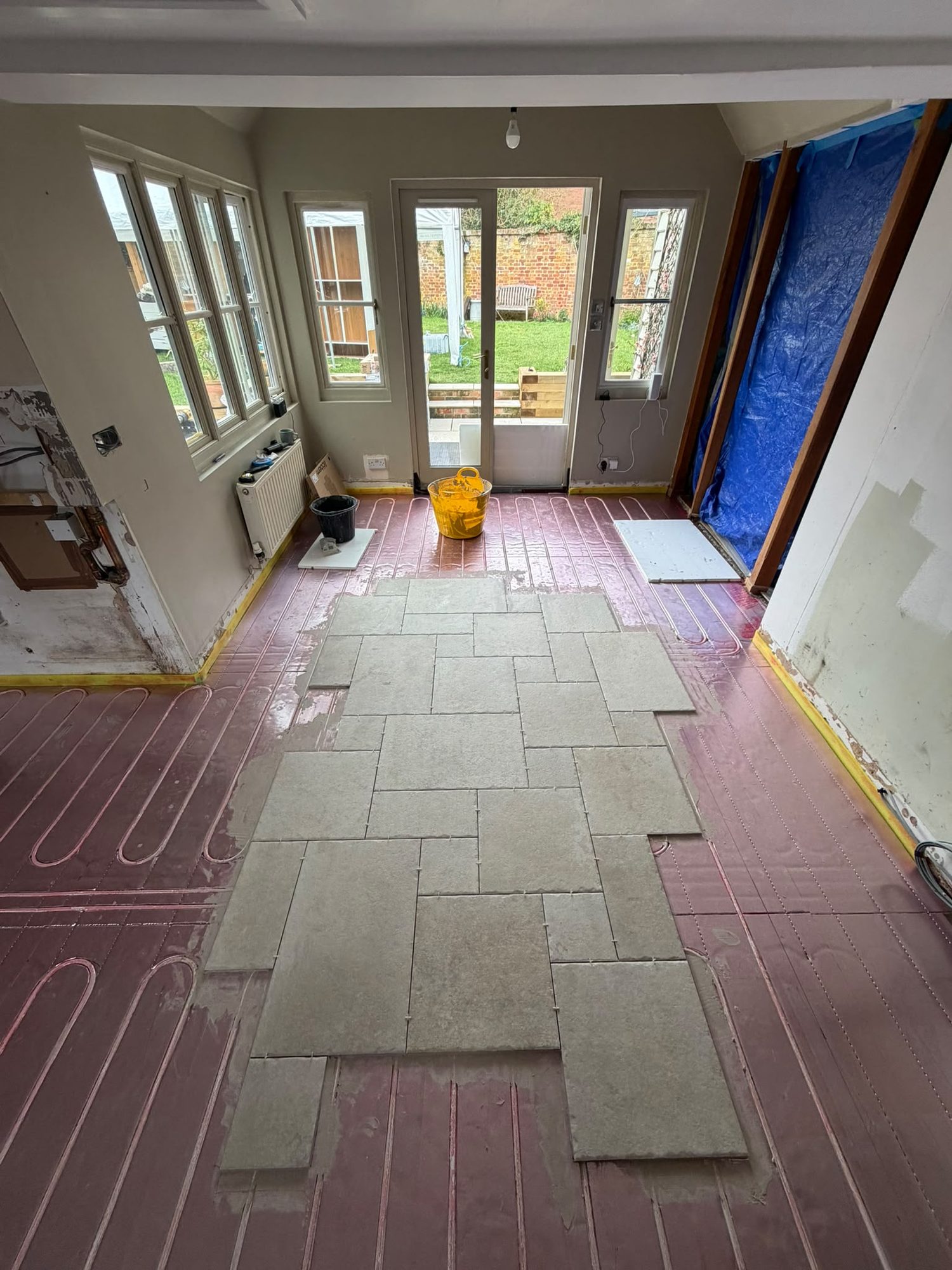
Tile is the ideal surface over underfloor heating because it conducts heat well, but it must be laid in a system designed for the thermal movement involved: flexible adhesive, correct screed or board build-up, and perimeter expansion allowance.
The heating must also be commissioned and brought up to temperature on the correct schedule after tiling, not switched straight on. Because we install underfloor heating ourselves, both halves of that are handled by the same team.
Bathrooms, kitchens and domestic work
Bathroom tiling is the most demanding domestic tiling there is: wet, small, full of cuts around brassware and fixings, and unforgiving of poor set-out. Kitchen tiling is less exposed to water but more exposed to scrutiny, since splashbacks sit at eye level on a level worktop line that shows every discrepancy.
Our tiling work is domestic, houses and flats across Epping, Harlow, Bishops Stortford and the surrounding towns, usually as part of bathroom projects, and sometimes as work in its own right.