System types and what suits which house
Most homes run one of three arrangements: a combination boiler with no stored hot water, a system boiler with an unvented cylinder, or an older open-vented setup with a tank in the loft and a vented cylinder. The right answer depends on the number of bathrooms, simultaneous demand, incoming mains flow rate and the space available.
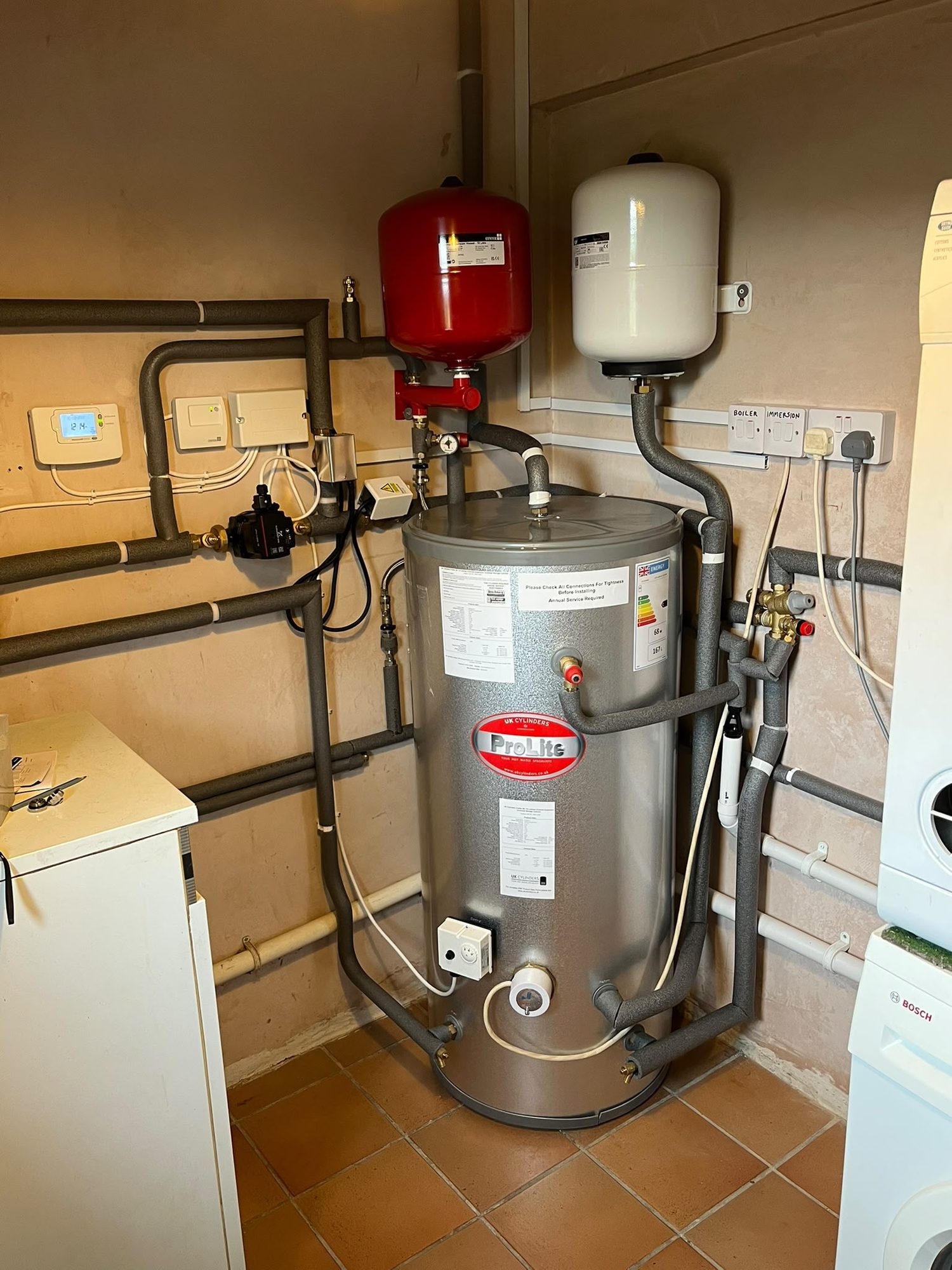
A combination boiler suits a home with one bathroom and good mains flow. Two or more bathrooms in regular simultaneous use usually points towards a system boiler and an unvented cylinder, which we are G3 qualified to install. Where mains flow is genuinely poor, keeping stored hot water is often the only way to get a decent shower.
We measure the incoming flow rate rather than assuming it, because that single figure decides whether a combination boiler will disappoint you every morning.
Pipework, materials and layout
Heating pipework is normally copper, with plastic barrier pipe used where routes demand it and joints are accessible or protected. Pipe sizing matters as much as material: an undersized run starves the radiators at the end of the circuit no matter what the pump is set to.
Older houses around Epping and Harlow frequently have one-pipe circuits or microbore, where each radiator is fed by small-diameter pipe. Microbore works, but it silts up and its capacity is limited, so adding load to it, a big new radiator, or heating for an extension, often means reworking sections rather than teeing into what is there.
Routing is planned with the finished house in mind: where boards will be lifted, where boxing is needed, and where valves need to remain accessible for the next 20 years.
Radiators, emitters and balancing
Radiator output has to be matched to the heat loss of the room, which depends on its size, glazing, external walls and insulation. Undersized radiators are the most common reason a room never quite gets warm; oversized ones waste money and space. We size to the room, and we will say when an existing radiator is simply too small for what you are asking of it.
Balancing is the part most often skipped. Each radiator's lockshield valve is adjusted so flow is distributed properly across the circuit, giving a consistent temperature drop across every emitter. It takes time on the day and it is the difference between a system that works and one that merely runs.
Thermostatic radiator valves give room-by-room control and are fitted as standard on new work, with the room containing the main thermostat deliberately left without one.
Controls, water treatment and flushing
Controls determine how intelligently the system uses gas: programmers, room thermostats, cylinder thermostats and zone valves for separate heating and hot water. Poor control strategy is why some houses run the whole system to heat one room in the evening.
System water is treated with inhibitor on every install to slow corrosion, and where an existing system is dirty it is flushed before new components go in. Putting a new boiler onto an untreated, sludged system is the fastest way to destroy an expensive heat exchanger, and a magnetic filter is a sensible addition on a system with history.
We also set out clearly what each new control does before we leave, because a well-designed system set up wrongly by its owner still produces high bills.
Extensions, conversions and partial upgrades
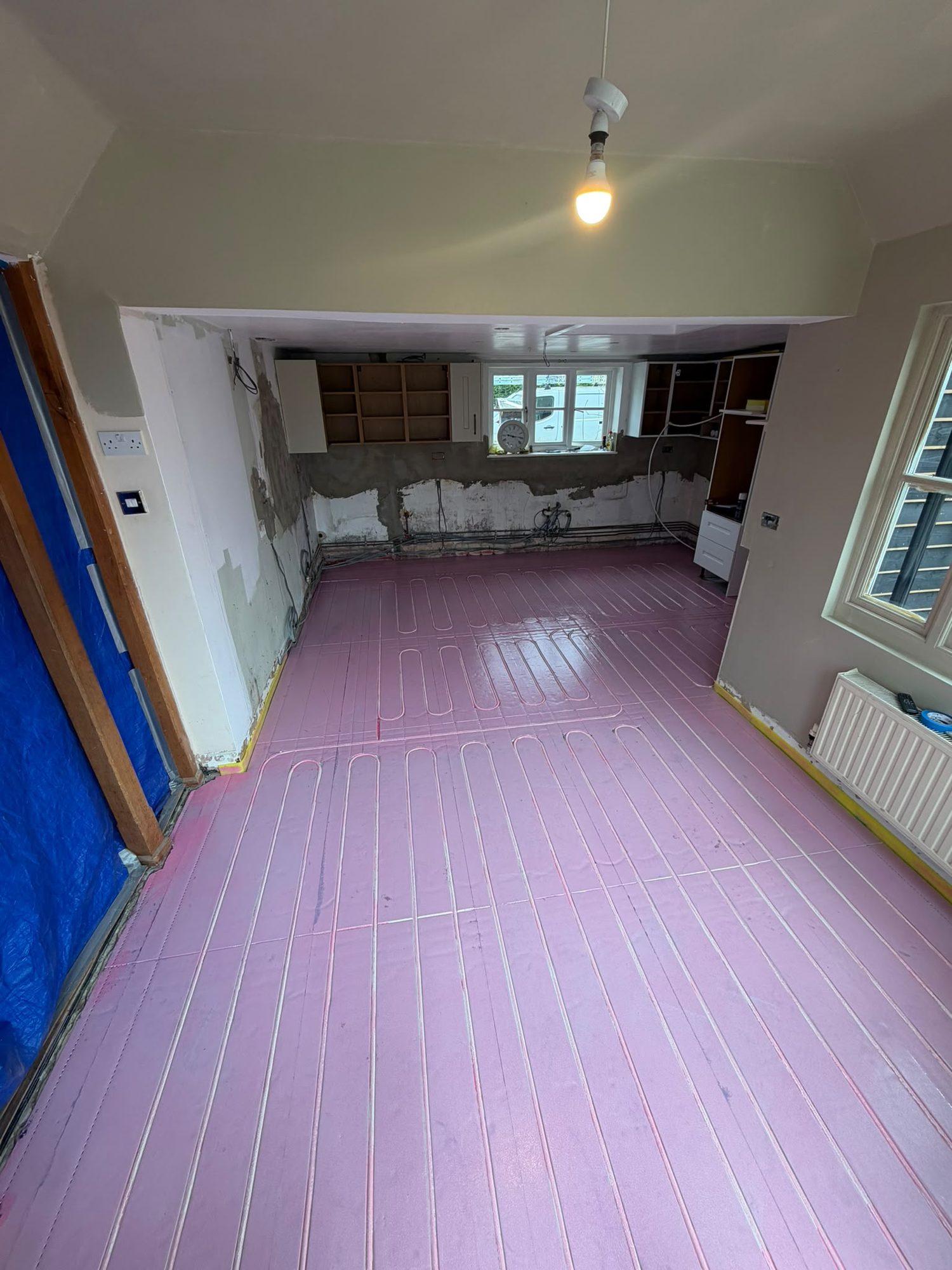
Extending heating into a new room is not simply adding a radiator. The additional load has to be within the boiler's capacity and the pipework's carrying capacity, and the existing balance has to be re-set afterwards. Where the existing system is already at its limit we will tell you before you commit, rather than adding load and letting the whole house get colder.
Partial upgrades, new radiators and valves on sound pipework, or new controls on a sound system, are often better value than replacement, and we will quote them where they genuinely solve the problem.